第 68 节 · SECTION 68
Using `Box<T>` to Point to Data on the Heap
Using Box<T> to Point to Data on the Heap
The most straightforward smart pointer is a box, whose type is written
Box<T>. Boxes allow you to store data on the heap rather than the stack.
What remains on the stack is the pointer to the heap data. Refer to Chapter 4
to review the difference between the stack and the heap.
Boxes don’t have performance overhead, other than storing their data on the heap instead of on the stack. But they don’t have many extra capabilities either. You’ll use them most often in these situations:
- When you have a type whose size can’t be known at compile time, and you want to use a value of that type in a context that requires an exact size
- When you have a large amount of data, and you want to transfer ownership but ensure that the data won’t be copied when you do so
- When you want to own a value, and you care only that it’s a type that implements a particular trait rather than being of a specific type
We’ll demonstrate the first situation in “Enabling Recursive Types with Boxes”. In the second case, transferring ownership of a large amount of data can take a long time because the data is copied around on the stack. To improve performance in this situation, we can store the large amount of data on the heap in a box. Then, only the small amount of pointer data is copied around on the stack, while the data it references stays in one place on the heap. The third case is known as a trait object, and “Using Trait Objects to Abstract over Shared Behavior” in Chapter 18 is devoted to that topic. So, what you learn here you’ll apply again in that section!
Storing Data on the Heap
Before we discuss the heap storage use case for Box<T>, we’ll cover the
syntax and how to interact with values stored within a Box<T>.
Listing 15-1 shows how to use a box to store an i32 value on the heap.
Listing 15-1: Storing an i32 value on the heap using a box
Filename: src/main.rs
fn main() {
    let b = Box::new(5);
    println!("b = {b}");
}
We define the variable b to have the value of a Box that points to the
value 5, which is allocated on the heap. This program will print b = 5; in
this case, we can access the data in the box similarly to how we would if this
data were on the stack. Just like any owned value, when a box goes out of
scope, as b does at the end of main, it will be deallocated. The
deallocation happens both for the box (stored on the stack) and the data it
points to (stored on the heap).
Putting a single value on the heap isn’t very useful, so you won’t use boxes by
themselves in this way very often. Having values like a single i32 on the
stack, where they’re stored by default, is more appropriate in the majority of
situations. Let’s look at a case where boxes allow us to define types that we
wouldn’t be allowed to define if we didn’t have boxes.
Enabling Recursive Types with Boxes
A value of a recursive type can have another value of the same type as part of itself. Recursive types pose an issue because Rust needs to know at compile time how much space a type takes up. However, the nesting of values of recursive types could theoretically continue infinitely, so Rust can’t know how much space the value needs. Because boxes have a known size, we can enable recursive types by inserting a box in the recursive type definition.
As an example of a recursive type, let’s explore the cons list. This is a data type commonly found in functional programming languages. The cons list type we’ll define is straightforward except for the recursion; therefore, the concepts in the example we’ll work with will be useful anytime you get into more complex situations involving recursive types.
Understanding the Cons List
A cons list is a data structure that comes from the Lisp programming language
and its dialects, is made up of nested pairs, and is the Lisp version of a
linked list. Its name comes from the cons function (short for construct
function) in Lisp that constructs a new pair from its two arguments. By
calling cons on a pair consisting of a value and another pair, we can
construct cons lists made up of recursive pairs.
For example, here’s a pseudocode representation of a cons list containing the
list 1, 2, 3 with each pair in parentheses:
(1, (2, (3, Nil)))
Each item in a cons list contains two elements: the value of the current item
and of the next item. The last item in the list contains only a value called
Nil without a next item. A cons list is produced by recursively calling the
cons function. The canonical name to denote the base case of the recursion is
Nil. Note that this is not the same as the “null” or “nil” concept discussed
in Chapter 6, which is an invalid or absent value.
The cons list isn’t a commonly used data structure in Rust. Most of the time
when you have a list of items in Rust, Vec<T> is a better choice to use.
Other, more complex recursive data types are useful in various situations,
but by starting with the cons list in this chapter, we can explore how boxes
let us define a recursive data type without much distraction.
Listing 15-2 contains an enum definition for a cons list. Note that this code
won’t compile yet, because the List type doesn’t have a known size, which
we’ll demonstrate.
Listing 15-2: The first attempt at defining an enum to represent a cons list data structure of i32 values
Filename: src/main.rs
enum List {
    Cons(i32, List),
    Nil,
}
Note: We’re implementing a cons list that holds only
i32values for the purposes of this example. We could have implemented it using generics, as we discussed in Chapter 10, to define a cons list type that could store values of any type.
Using the List type to store the list 1, 2, 3 would look like the code in
Listing 15-3.
Listing 15-3: Using the List enum to store the list 1, 2, 3
Filename: src/main.rs
// --snip--

use crate::List::{Cons, Nil};

fn main() {
    let list = Cons(1, Cons(2, Cons(3, Nil)));
}
The first Cons value holds 1 and another List value. This List value is
another Cons value that holds 2 and another List value. This List value
is one more Cons value that holds 3 and a List value, which is finally
Nil, the non-recursive variant that signals the end of the list.
If we try to compile the code in Listing 15-3, we get the error shown in Listing 15-4.
Listing 15-4: The error we get when attempting to define a recursive enum
$ cargo run
   Compiling cons-list v0.1.0 (file:///projects/cons-list)
error[E0072]: recursive type `List` has infinite size
 --> src/main.rs:1:1
  |
1 | enum List {
  | ^^^^^^^^^
2 |     Cons(i32, List),
  |               ---- recursive without indirection
  |
help: insert some indirection (e.g., a `Box`, `Rc`, or `&`) to break the cycle
  |
2 |     Cons(i32, Box<List>),
  |               ++++    +

For more information about this error, try `rustc --explain E0072`.
error: could not compile `cons-list` (bin "cons-list") due to 1 previous error
The error shows this type “has infinite size.” The reason is that we’ve defined
List with a variant that is recursive: It holds another value of itself
directly. As a result, Rust can’t figure out how much space it needs to store a
List value. Let’s break down why we get this error. First, we’ll look at how
Rust decides how much space it needs to store a value of a non-recursive type.
Computing the Size of a Non-Recursive Type
Recall the Message enum we defined in Listing 6-2 when we discussed enum
definitions in Chapter 6:
enum Message {
    Quit,
    Move { x: i32, y: i32 },
    Write(String),
    ChangeColor(i32, i32, i32),
}
To determine how much space to allocate for a Message value, Rust goes
through each of the variants to see which variant needs the most space. Rust
sees that Message::Quit doesn’t need any space, Message::Move needs enough
space to store two i32 values, and so forth. Because only one variant will be
used, the most space a Message value will need is the space it would take to
store the largest of its variants.
Contrast this with what happens when Rust tries to determine how much space a
recursive type like the List enum in Listing 15-2 needs. The compiler starts
by looking at the Cons variant, which holds a value of type i32 and a value
of type List. Therefore, Cons needs an amount of space equal to the size of
an i32 plus the size of a List. To figure out how much memory the List
type needs, the compiler looks at the variants, starting with the Cons
variant. The Cons variant holds a value of type i32 and a value of type
List, and this process continues infinitely, as shown in Figure 15-1.
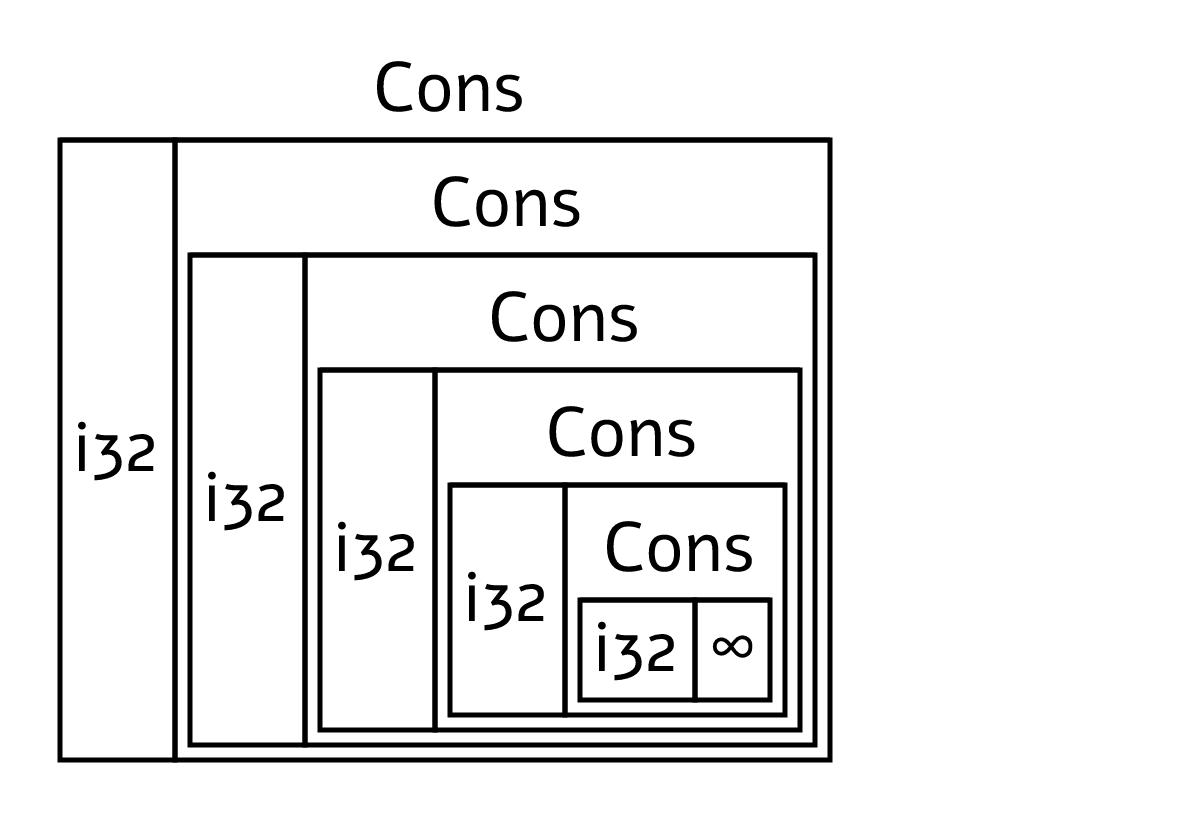
Figure 15-1: An infinite List consisting of infinite
Cons variants
Getting a Recursive Type with a Known Size
Because Rust can’t figure out how much space to allocate for recursively defined types, the compiler gives an error with this helpful suggestion:
help: insert some indirection (e.g., a `Box`, `Rc`, or `&`) to break the cycle
  |
2 |     Cons(i32, Box<List>),
  |               ++++    +
In this suggestion, indirection means that instead of storing a value directly, we should change the data structure to store the value indirectly by storing a pointer to the value instead.
Because a Box<T> is a pointer, Rust always knows how much space a Box<T>
needs: A pointer’s size doesn’t change based on the amount of data it’s
pointing to. This means we can put a Box<T> inside the Cons variant instead
of another List value directly. The Box<T> will point to the next List
value that will be on the heap rather than inside the Cons variant.
Conceptually, we still have a list, created with lists holding other lists, but
this implementation is now more like placing the items next to one another
rather than inside one another.
We can change the definition of the List enum in Listing 15-2 and the usage
of the List in Listing 15-3 to the code in Listing 15-5, which will compile.
Listing 15-5: The definition of List that uses Box<T> in order to have a known size
Filename: src/main.rs
enum List {
    Cons(i32, Box<List>),
    Nil,
}

use crate::List::{Cons, Nil};

fn main() {
    let list = Cons(1, Box::new(Cons(2, Box::new(Cons(3, Box::new(Nil))))));
}
The Cons variant needs the size of an i32 plus the space to store the box’s
pointer data. The Nil variant stores no values, so it needs less space on the
stack than the Cons variant. We now know that any List value will take up
the size of an i32 plus the size of a box’s pointer data. By using a box,
we’ve broken the infinite, recursive chain, so the compiler can figure out the
size it needs to store a List value. Figure 15-2 shows what the Cons
variant looks like now.
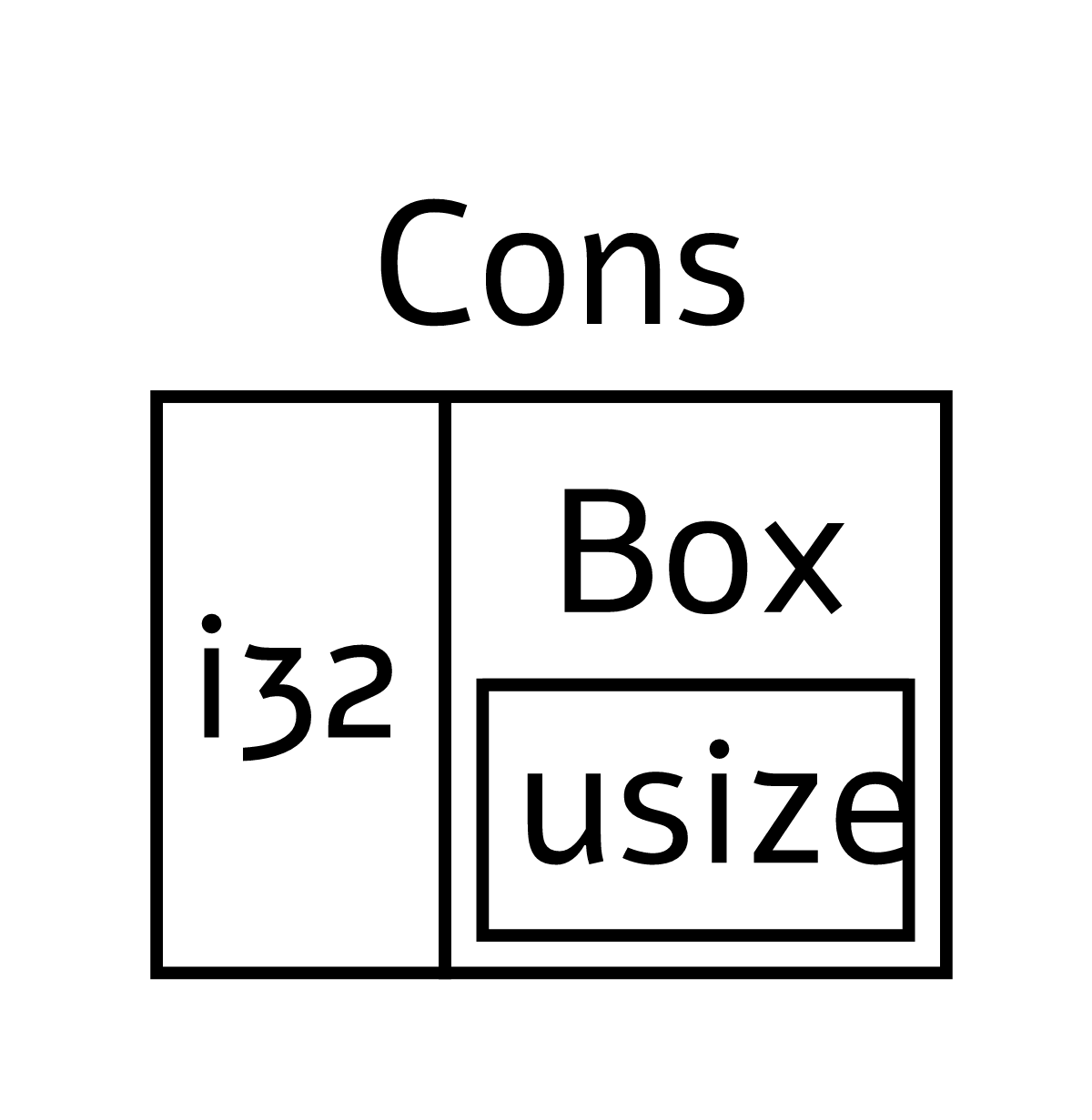
Figure 15-2: A List that is not infinitely sized,
because Cons holds a Box
Boxes provide only the indirection and heap allocation; they don’t have any other special capabilities, like those we’ll see with the other smart pointer types. They also don’t have the performance overhead that these special capabilities incur, so they can be useful in cases like the cons list where the indirection is the only feature we need. We’ll look at more use cases for boxes in Chapter 18.
The Box<T> type is a smart pointer because it implements the Deref trait,
which allows Box<T> values to be treated like references. When a Box<T>
value goes out of scope, the heap data that the box is pointing to is cleaned
up as well because of the Drop trait implementation. These two traits will be
even more important to the functionality provided by the other smart pointer
types we’ll discuss in the rest of this chapter. Let’s explore these two traits
in more detail.